



They're Just Baby Teeth . . .
August 1st, 2013
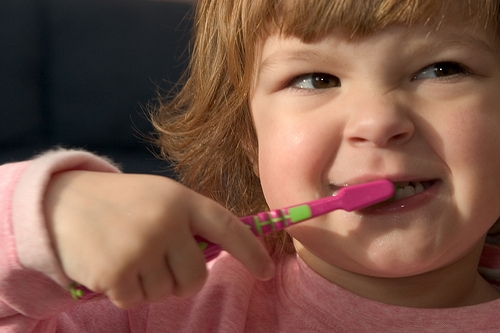
“But they are only baby teeth; won’t they will just fall out.” Our team at Dr. John Rottschalk Dental Group has had these questions asked many times from parents over the years. Primary teeth, or “baby teeth,” will indeed come out eventually, to be replaced by permanent teeth as the child grows and develops. These teeth serve a great purpose as the child continues to develop and require specific care.
Because baby teeth are temporary, some parents are unenthusiastic about fixing cavities in them. This may be due to the cost or having to force a child undergo the process—especially having to receive an injection. But if a cavity is diagnosed early enough, an injection can often be avoided. More important, failure to fill cavities in primary teeth when they are small and manageable can have lasting consequences in cost and health concerns. Serious illnesses in children have been diagnosed which began as a cavity.
Primary teeth act as a guide for permanent teeth. When decay reaches the nerve and blood supply of a tooth, this can cause an abscess. Severe pain and swelling may result. At that point, the only treatment options are either to remove the tooth or to perform a procedure similar to a baby root canal. When a primary tooth is lost prematurely—to decay or a painful abscess—the adjacent teeth will often shift and block the eruption of a permanent tooth. Braces or spacers become necessary to avoid crowding or impaction of the permanent tooth.
There is nothing more heartbreaking for Dr. Rottschalk than to have to treat a child experiencing pain and fear. To all the parents of my little patients our team strongly recommend filling a small cavity and not waiting until it becomes a larger problem such as those described above.
Prevention is the key to a healthy mouth for our smallest patients. Parents should allow the child to brush his or her teeth using a pea-sized amount of fluoride toothpaste and then take a turn to ensure the plaque gets removed from all surfaces: cheek side, tongue side, and chewing edges of all the teeth.
Common Emergency Visits: From Lost Fillings to Broken Dentures
July 25th, 2013

You never know when you're going to experience a dental emergency, but if you do, it should give you peace of mind that know that emergency dental care is available at our office 24/7. Whether you chip your front tooth playing softball, or your child knocks out a couple of teeth in a playground fall, receiving the emergency dental treatment you need is accessible and convenient.
If you're experiencing a dental emergency, our team at Dr. John Rottschalk Dental Group is here to help you any time of the day or night. Dental emergencies should not be taken lightly, so don't delay. Contact our office as soon as possible. Common dental emergencies include the following:
Lost Fillings and Crowns
Fillings are used to repair cavities. Crowns, on the other hand, are used to cover broken or damaged teeth. Over time, it’s possible for both of these items to loosen and fall out. A lost filling or crown can be painful, because the exposed tissue may be sensitive. Hot and cold temperatures will cause discomfort. While a lost filling or crown might not be as severe a dental emergency as a broken or chipped tooth (most people respond quicker to pain than self-consciousness about their looks), you need to get it fixed as soon as possible.
Broken Dentures
If your dentures are broken, everyday tasks may become trying and arduous. If you can’t chew, swallow, or eat properly, the situation calls for emergency care. Depending on how damaged your dentures are, Dr. Rottschalk may need to send out a mold of your mouth in order to have the manufacturer make a new pair. On the other hand, if the dentures are not damaged too badly, then we may be able to fix them in-house. If you're having problems with your dentures, you should give us a call as soon as possible.
From chipped and cracked teeth to lost fillings and broken dentures, dental emergencies come in all shapes and sizes. Emergencies are unexpected, but we want you to know that treatment is available, day or night. When your dental health is at risk, we are here to help. In the case of a dental emergency, don't wait; contact our Fairview Heights, IL office at your earliest convenience.
Pediatric Dentistry: The Benefits of Dairy
July 18th, 2013

When you were a child, your mother may have instructed you to drink all your milk to build strong bones. Now that you have children of your own, you may hear yourself parroting those instructions you received years ago. Getting enough dairy is essential for young children whose teeth are growing. A child who consumes the recommended daily serving of dairy will develop healthy, strong teeth for the rest of his or her life.
Structure of the Tooth
To fully grasp the importance of dairy for dental health, it is necessary to understand tooth structure. Your teeth are made of living tissues covered by a hard outer shell. The inner dental pulp is fed by blood vessels and connects to a nerve bed in your gums. Surrounding the pulp is dentine, a calcified tissue that is less brittle than the tooth’s outermost layer, the enamel. The enamel layer is the white part of your teeth, 96% of which consists of minerals such as calcium phosphate.
How Does Dairy Help My Child’s Teeth?
Milk and other dairy products are excellent sources of calcium. Your child’s body deposits this calcium into her growing bones, including the teeth. Calcium contributes to bone growth and strength, and it forms an important part of the solid enamel that surrounds each tooth’s fragile inner pulp. Milk also contains vitamin D, phosphorus, magnesium, and proteins. Magnesium promotes calcium deposits in your enamel, while phosphorus forms a small barrier against acidic foods that cause cavities. Vitamin D and protein are used by a child’s body to build bone tissue and maintain dental health.
How Much Dairy Does a Child Need?
According to a 2011 study conducted by researchers at the University of Connecticut, the majority of Americans do not receive enough calcium. The U.S. Department of Agriculture recommends that children under the age of eight should receive at least two and a half cups of dairy per day. Children older than eight need three full cups — the same as adult men and women. Supplying your child with nonfat milk to drink and yogurt to eat every day is a great way to increase dairy consumption.
Growing children who do not get enough dairy in their diets risk improper tooth development and other dental health problems. Drinking sugary beverages in place of milk causes cavities and tooth decay. As a parent, it is essential to monitor your child’s dairy consumption to ensure he or she grows healthy teeth to last a lifetime.
Is there a correlation between my dental and cardiovascular health?
July 11th, 2013

YES! Studies have shown a correlation between gum disease and heart disease, underscoring the importance of good oral health care. Cardiovascular disease remains American’s leading killer, claiming more lives than the rest of major causes of death, according to our friends at the American Heart Association. In fact, an estimated 80 percent of American adults currently have some form of gum disease, also known as periodontal disease.
Studies also suggest that patients, especially those with gum disease, are believed to have an elevated risk of heart attack and stroke. Since most patients are not regularly visiting a heart specialist, their regular visits to our Fairview Heights, IL office can help detect early warning signs of heart issues, prevent gum disease or at the very least catch it at its early stage. We’d also like you to know your numbers: blood pressure (less than 120/80), cholesterol (less than 200) and BMI (less than 25).
There are many benefits to visiting Dr. John Rottschalk Dental Group in addition to maintaining your dental health. If it has been more than six months since your last visit, please give us a call!