



Labor Day: Our Favorite Holiday to Rest!
August 29th, 2013

Labor Day, celebrated on the first Monday each September here in the United States, is a holiday devoted to the American working community. The purpose of the holiday is honoring the country's workers and their contributions to the strength of our country as a whole.
How Labor Day Started
There is actually some debate as to the origins of Labor Day. It is uncertain whether Peter McGuire, a co founder for the American Federation of Labor, or Matthew Maguire, who was the secretary of Central Labor Union of New York, had the great idea. However, the Central Labor Union's plans were what launched the first Labor Day in America.
The First Labor Day
The very first Labor Day was celebrated on September 5th, 1882. The Central Labor Union then held annual celebrations on September 5th for what they called a working man's holiday. By the year 1885, the Labor Day celebration had spread to many different industrial areas, and after that it began spreading to all industries in the United States.
Labor Day Today
Labor Day today is a huge United States holiday during which we honor the country's workers with a day of rest and relaxation or a day of picnics and parades. This holiday is truly one to honor the many people who work hard to contribute to the economic well-being of our great country!
Our team at Dr. John Rottschalk Dental Group hope all of our patients celebrate Labor Day, and every holiday, safely and happily. Whether you stay in the Fairview Heights, IL area, or travel out of town, have fun, and don't forget to brush!
How to Brush a Two-Year-Old’s Teeth Effectively
August 22nd, 2013

Our team at Dr. John Rottschalk Dental Group would like to offer some tips regarding the sometimes dreaded task of brushing a toddler’s teeth.
Much of the trick lies in the positioning. Before you begin, make sure you are in a position of control. This protects both you and your child from injury. Consider how well you can see. If you cannot see clearly, the quality of brushing drops significantly. For instance, if your child is standing, you are likely to see only the bottom teeth well.
Our team finds that the best position for brushing and flossing a toddler is when your child is calm. Have your child lie down on his or her back with arms out to make a T. Sit down just above the head and lightly place your legs over your child’s arms. Using a circular motion, brush all sides of the teeth.
It may sound odd, but approaching the routine this way can make brushing time a cinch! After you’re done, give your child the toothbrush and let him or her have a turn. The benefit of doing the brushing and flossing first is that it gives an example, which your child is more likely to repeat when you’re done.
Different methods work best for different families and children. These practices need to be performed with kindness and care. Be gentle and make this time a happy learning time. Don’t forget to bring your child to our Fairview Heights, IL office for regular dental checkups and cleanings. Dr. Rottschalk can advise you on ways to implement portions of these tips in a way that may work bests for you and your child.
You Broke Your Tooth – Now What?
August 15th, 2013

You may have bitten down on a hard food or object, or perhaps you had a cavity that weakened your tooth. Either way, your tooth is now broken, and the steps you take to care for it will determine whether you get to keep your natural tooth or not. Millions of people suffer from broken teeth every year, so you are not alone. However, that does not mean your newly cracked tooth does not need immediate attention.
What is a Broken Tooth?
A broken tooth is one that has been fractured, chipped, cracked, broken apart, or completely knocked out of the mouth. You may or may not feel your tooth break, depending on the extent of the break and whether your tooth was decaying prior to the break. It is usually very easy to diagnose a broken tooth, because the evidence will be visible. In the case of hairline cracks in the teeth, you may start to note a sensitivity to hot or cold in the neighborhood of the fracture.
The Right Way to Handle a Broken Tooth
As soon as you know your tooth is broken, chipped, or fractured, make an appointment to visit our emergency dental office. Even the tiniest fractures require attention: bacteria can infect the fractured area, which could cause you to lose the tooth altogether.
Until you are in our office, you can manage your pain using over-the-counter pain medication, such as Tylenol, or you can apply a cold compress to prevent swelling and inflammation. Be sure to rinse your mouth with warm salt water after every meal until you are able to visit us.
Keep in mind that while pain medication is an effective way to manage a broken tooth at home, it is only a temporary fix. Broken teeth should not be treated solely at home, and over-the-counter solutions are not substitutions for professional dental care. Failing to make an appointment with Dr. Rottschalk after breaking or chipping a tooth can place your health at risk.
Treatment
Treating your broken tooth will depend on the type of break you have and how much of the tooth is affected. According to the American Dental Association, a minor chip or tiny fracture line may be repaired with bonding. On the other hand, a more serious break that exposes the tooth's pulp may require a root canal or extraction to prevent infection. Ultimately, our team here at Dr. John Rottschalk Dental Group will explain to you the best treatment plan based upon our evaluation of the condition and extent of your break.
If you have broken, cracked, chipped, or fractured one or more of your teeth, don’t hesitate to contact our office immediately. We specialize in emergency dental care and are available to serve you 24 hours a day, seven days a week.
Treatment and Diagnosis for your Child’s Teeth Grinding
August 8th, 2013
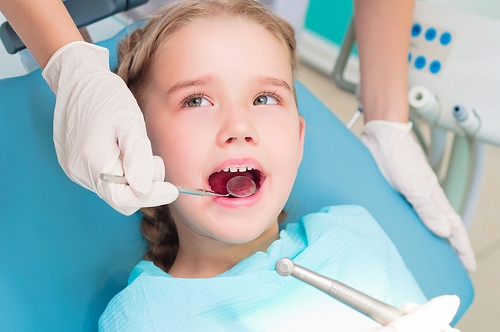
The habit of grinding teeth can be both painful and harmful for your children. If you discover that they are frequently grinding their teeth—a condition called bruxism—here is some helpful information on the problem, and how you can find help to put a halt to it.
How to Know if Your Child is Grinding
Sometimes, identifying a child that grinds teeth is as simple as checking in while he or she is asleep. At other times, you may not be able to readily identify the grinding problem. A few of the most common symptoms associated with bruxism include:
- Frequent teeth grinding or clenching of the jaw (in some cases it may be more subtle; in others it may be loud enough that you can hear it)
- Teeth that are worn down
- Complaints of sensitive teeth
- Pain or tightness in the jaw muscles, or an earache or other jaw pain
- Frequent unexplained headaches
In most cases, if your children are grinding their teeth, they will do it at night. If the teeth grinding is a result of excessive amounts of stress, it may also happen during the daytime. Some of the most common reasons children grind their teeth involve:
- Improper alignment of top and bottom teeth
- As a response to pain, especially for tooth, jaw, or gum pain
- Excessive stress, tension, or anger
Treatment Options for Bruxism
In many cases, children will grow out of the teeth grinding as their permanent teeth develop, replacing poorly aligned or painful baby teeth. If your child grinds his or her teeth more frequently, or you begin to notice significant damage, it may be more serious and need to be addressed by Dr. Rottschalk before it causes more permanent pain or problems.
In some cases, our team at Dr. John Rottschalk Dental Group may recommend that your child wears a protective mouthguard to prevent grinding, or work with a therapist or other specialist to develop awareness of the grinding. If the grinding is caused by stress or anxiety, it may be helpful for you to sit down and talk to your child each day about how she is feeling, and why, to help her work through the stress.
Teeth grinding can be a painful, problematic condition for some children. However, a combination of parental vigilance and frequent visits for regular checkups at our Fairview Heights, IL office can help. If you are concerned that your child may be grinding his or her teeth, and it could cause permanent damage before the child grows out of it, come talk to us about strategies for dealing with bruxism, and ways for you to help your child.