



Whitening Teeth with Braces
January 29th, 2020

Now that you are working hard to improve your dental health and appearance with your braces, it might seem like a logical time to whiten your teeth as well. But should you go ahead with home kits or a professional whitening? The answer might be yes, but not quite yet!
Toothpaste
The easiest way to whiten teeth is regular use of a whitening toothpaste. But these do not make a major difference in tooth color and may also contain abrasives which can damage ceramic brackets and make them more likely to stain. And, whether you have metal or ceramic braces, the brackets used are bonded to your teeth. Any part of your tooth covered by a bracket will not be affected by the whitening paste. Ask our office if you are thinking of using one of these products. We will be happy to recommend the best toothpastes to use while your braces are in place.
Whitening Strips and Trays
Whiteners can be applied at home with strips or tray kits. Strips are coated with a whitening gel and then pressed around your teeth. Tray kits provide a mouthguard-like appliance, which is filled with whitening gel. But neither strips nor tray solutions will whiten any area covered by brackets. When your braces come off, there might be noticeable differences in color on each tooth. Strips are difficult to apply with braces, and trays need to be custom-designed to fit your braces and make sure they don’t disturb your orthodontic work. One size most definitely does not fit all! Finally, these whitening agents can cause tooth and gum sensitivity, especially around the time of adjustments. Many manufacturers do not recommend using their products while you have braces. Please talk to us if you are thinking of using them.
Professional Whitening
A dental professional can whiten your teeth in office for the best possible results. The most effective treatments for your unique teeth are combined with protective care of your gums and mouth. Whether this treatment is appropriate while you have braces is something we are happy to discuss.
The best way to keep your teeth bright is to keep up your regular dental routine! Brushing and flossing are more important than ever now, because plaque builds up around brackets. Avoid foods that stain teeth and rinse or brush after every meal and snack. Drs. Rottschalk, Acker, and Froidcoeur will show you the best way to take care of your teeth while your braces are on—and that includes the best way to keep them white and bright. Talk to us about the perfect time to whiten your beautiful smile during your next visit to our Fairview Heights, IL office. And if you have to wait a few extra days for the smile you’ve been working toward, truly, the wait will be worth it!
Seven Ways to Repurpose Old Toothbrushes
January 22nd, 2020

It’s done a wonderful job for you, but after three or four months, the time has come to retire your toothbrush. Bristles that once easily removed food particles and plaque have become frayed and just aren’t as effective. But now that you’re regularly changing out your toothbrush, what to do with those retired brushes besides add to the local landfill? Check out some recommendations from Drs. Rottschalk, Acker, and Froidcoeur for some second career options for that old toothbrush.
Make Your Jewelry Shine
A gentle brush with your favorite jewelry cleaner and your old brush will remove dirt from small spaces and filigree that a cloth just can’t reach. Do check that brushing is safe for your jewelry—pearls, for example, are not a good candidate.
Keep Your Woodwork Dust-free
Keep the details on your wood trim dust free with an old toothbrush. Baseboards are some of the hardest places to keep clean—even vacuums have difficulty getting dust and dirt out of trim. But an old toothbrush is perfect for cleaning the top, the grooves, and the inside corners of your baseboards. You can also remove dust from around door trim and inside window tracks.
Polish Sinks and Faucets
Use a repurposed toothbrush to remove build-up where the base of your faucet meets the sink, or around levers and handles. And don’t forget the metal ring around the drain!
Clean Kitchen Gadgets
Those miniature blades in your coffee maker or blender, the tiny holes in your cheese grater, the micro-openings in your microplane—small cleaning jobs need small tools! Try an old brush the next time you have a mini-cleaning problem.
De-grease Appliances
And while we’re in the kitchen, don’t forget your appliances. A toothbrush can clean grease around dials, handles, and knobs where a sponge can’t reach.
Refresh Your Grout
There are special brushes made just for scrubbing grout, but give your old brush a try first. Use your regular cleaning solution or paste for fresh, clean grout lines on your tile floors and counters.
Keep Your Technology Sleek
Your keyboard has a busy life and it shows! Keep the spaces between your keys dust and crumb free with a clean, dry toothbrush. The next time you’re detailing your car’s interior, try a toothbrush for cleaning around buttons and dials on your dash. And don’t forget your remote controls, or any other place where keys, knobs, and buttons collect dust.
There’s still a lot of life left in that toothbrush! If you choose to reuse, do be sure to thoroughly clean your toothbrush before it transitions to another housekeeping detail. It’s worth the effort—your old brush will prove useful in any number of new ways, and your home—and the environment—will thank you!
Things You Should Know Before Getting an Oral Piercing
January 15th, 2020

Have you been thinking about getting an oral piercing lately? It could seem enticing because they look trendy or cool, but it’s worth know the health risks associated with oral piercing. Even if you already have one, you may learn a few things you didn’t know.
The human mouth contains millions of bacteria. Even without piercings, it’s not uncommon for people to develop an infection every once in a while. By adding an oral piercing, you increase your likelihood of getting an infection.
Many people who have piercings tend to develop the habit of touching them regularly, which is the like opening a door and yelling, “Welcome home, infections!” And because these piercings are in your mouth, particles of all the food that comes through can accumulate and eventually cause a pretty serious health situation.
It’s hard to ignore the presence of an oral piercing, so biting or playing with the site is fairly common. Doing so can lead to teeth fractures, however. While a fracture might be on the enamel of a tooth and require a simple filling, it can also go deeper, which could entail a root canal or even tooth extraction.
Other risks include hindering your ability to talk and eat, nerve damage, gum damage, and even loss of taste.
If you’re still determined to get an oral piercing, at least be aware of the time it will take to heal. It can take anywhere from four to six weeks, and can cause great discomfort during that time. Be willing to give it that time in order to lower your chances of infection.
Make sure you understand that getting an oral piercing will involve adding further responsibility to your daily dental health duties. It’s essential that you commit to regular upkeep on your end, and not just while it’s healing.
Warning Signs of Impacted Wisdom Teeth
January 8th, 2020
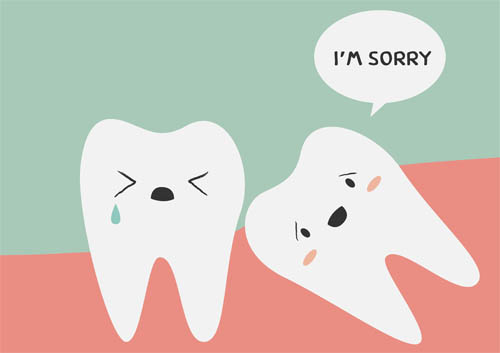
When your wisdom teeth start to emerge it can definitely be painful, but it can be even worse if your wisdom teeth become impacted. Impacted wisdom teeth are trying to erupt but are unable to do so because there is not sufficient room for them to emerge. This usually means that your wisdom teeth are painfully lodged in your jawbone.
While you may not see any real signs of the emerging wisdom teeth when they are impacted, what you can’t see can still definitely hurt you. Some of the indicators of impacted wisdom teeth are listed below.
- Jaw Pain: Pain in the back of your jaw is a common indicator of impacted wisdom teeth. The pain often concentrates in the area around your gums.
- Changes in the Mouth: You may notice some changes in your mouth when you have impacted wisdom teeth. Reddish gums, swelling in the jaw, bleeding gums, and bad breath can all be indicators that you are dealing with impacted wisdom teeth.
- Headaches: If you suddenly start having headaches, especially at the same time as some of the other issues mentioned above, they may indicate impacted wisdom teeth.
- Chewing Issues: Problems with chewing normally can indicate impacted wisdom teeth. If you are having trouble making the chewing motions because your mouth won’t quite open and close as easily as it used to, impacted wisdom teeth may be the culprit.
The Solution
If you are suffering from impacted wisdom teeth, the best solution is usually going to be removal. This is not a problem that will resolve naturally, and in fact, your pain and other symptoms may worsen as your wisdom teeth become increasingly impacted. At Dr. John Rottschalk Dental Group, Drs. Rottschalk, Acker, and Froidcoeur can review the details of wisdom teeth removal surgery with you and help you determine if this is the best solution for your situation.