



The Consequences of Sports and Energy Drinks
April 28th, 2021

They’re refreshing and tasty. They’re easy to find and pretty cheap. They help us get through a long day or a long workout. They’re everywhere.
We know it’s hard to say no to an energy or sports drink. That’s why Drs. Rottschalk, Acker, and Froidcoeur and our team want to make sure you know the effects that energy and sports drinks can have on your smile and overall oral health. You might just think twice next time you crave one.
There’s a common misconception that sports and energy drinks are somehow healthier than soda beverages. None is particularly good for you, but because sports and energy drinks have higher acidity levels, they put you on a fast track to enamel erosion, which can lead to cavities over time. However, studies show that energy drinks may be the worst of the bunch.
In a study published in General Dentistry, the energy drinks that showed the highest acidity levels were 5-hour Energy, Monster, Rockstar, and Red Bull Sugar free. These drinks almost doubled in acidity when compared to sports drinks. The sports drinks that came in second as far as acidity levels go were Powerade, Gatorade, and Propel.
You may be thinking, “What's the big deal; lots of other drinks damage your teeth, too,” and you’re right. Even all-natural beverages like orange juice and other fruit juices, which are advertised as full of vitamins, contain acid that damages tooth enamel. The point here is that moderation is key.
We certainly encourage you to choose a glass of orange juice over an energy drink, but if you feel like you just can’t give up your sports and energy drink habit, then please consider the following tips:
- Limit yourself to a certain number of said beverages a week and stick to it.
- Rinse with water after consuming an energy or sports drink.
- Brush your teeth after an hour of downing the drink, so your mouth has time to return to its normal pH level.
If you have any questions, don’t hesitate to give us a call at our Fairview Heights, IL office. Shoot us a message on Facebook, or let us know on your next visit!
Creating a Dental Home
April 21st, 2021

As a parent, you know how important a happy, relaxed atmosphere is when it comes to making your child feel at home. We would like to make our Fairview Heights, IL practice your dental home, where you and your family enjoy the best of dental care in a warm and welcoming environment.
What makes a dental home?
- It’s Welcoming
From your child’s first visit, we strive to make you both feel at ease. Our office is designed to be a happy, entertaining, and relaxing place, and our staff is trained in making little ones feel calm and secure. We want to have a lasting relationship, and we want you and your child to feel welcomed back whenever you return.
- It’s Familiar
We recommend visiting our office for the first time by the time of your child’s first tooth or first birthday. Our early visits are designed to make your child familiar with what a dentist does and how a dentist helps keep children healthy. Regular preventative care will keep those little teeth in great shape, and, if your child has a cavity that needs filling or requires any other dental procedure, we will have a history together and a familiar place to experience an unfamiliar treatment.
- It’s Comfortable
We use state-of-the-art dentistry to make sure your child has the best and most comfortable treatment as a patient, and we also consider the psychological aspect of each visit for your particular child. We are experienced in dealing with children who might feel anxious and working with them to overcome their worries. Part of our job is to make each visit a happy one, so your child is always comfortable visiting us.
- It’s Ongoing
We want to establish a relationship that will last through the years. Continuity of care means that we are able to follow your child’s dental development during those active growing years and the transition from primary to permanent teeth. We provide not only dental health education, treatment, and preventive care, but can track any changes or potential problems before they become major issues. In case of a dental emergency, we will be familiar with your child personally, and with a dental history at hand.
Give Drs. Rottschalk, Acker, and Froidcoeur a call to talk about your child and how we can make the dental experience a positive one from the very beginning. When it comes to establishing a happy and healthy foundation for your child’s dental history, there’s no place like our dental home!
Baby Teeth and Cavities
April 14th, 2021
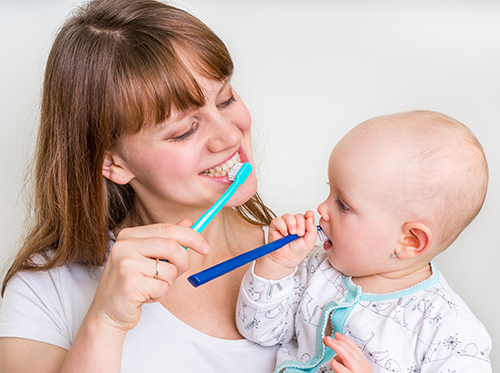
We know how frustrating it can be to discover your child has one or more cavities when you come to visit Dr. John Rottschalk Dental Group. There are several ways to prevent baby teeth from forming cavities due to decay. Not to worry: If your child does develop a cavity on a baby tooth, Drs. Rottschalk, Acker, and Froidcoeur can help take care of the problem.
Let’s look at how cavities on your little one’s teeth can be prevented from developing in the first place. Most often, children suffer decay from eating sugary foods. You may think, “My child doesn’t eat lots of candy!” In truth, fruits and juices have plenty of natural sugars that can break down teeth if they aren’t brushed thoroughly.
A well-balanced diet that includes calcium and phosphorous is necessary to keep your child’s oral health in a good state. If your son or daughter drinks juice, avoid giving it before bedtime and dilute the juice with water. Good options for snacks include vegetables, low-sugar yogurt or dairy products, and plenty of milk for healthy teeth.
Another excellent preventive strategy consists of scheduling regular appointments with Drs. Rottschalk, Acker, and Froidcoeur for your child. Between your youngster’s annual cleanings, make sure he or she brushes and flosses every day. It’s worthwhile for your little one to brush thoroughly for at least two minutes to remove any decay or plaque that has accumulated in the mouth, especially before bedtime.
Brushing Techniques
- Move the brush both back and forth, and in circular gentle strokes.
- Brush the outer surfaces, inside surfaces, and chewing surfaces of all teeth.
- Place the toothbrush at a 45-degree angle to the gums.
- Brush the tongue to remove excess bacteria and keep breath fresh.
It’s not always possible to prevent cavities from appearing in your son or daughter’s mouth. If your child does develop a cavity, our staff will notify you during the regular scheduled cleaning.
The cavity will need to be eliminated, even when it appears on a baby tooth. Our staff will remove the decayed part of the tooth and fill in the hole so your child doesn’t have to experience any pain.
You may wonder why a baby tooth has to be fixed if it is eventually going to fall out. Baby teeth hold spaces where your child’s permanent teeth have to grow in. If the former aren’t taken care of, multiple teeth may shift and the permanent ones won’t be able to grow in properly.
If you still have questions or concerns about your child’s baby teeth, or notice signs of a cavity, please don’t hesitate to contact our Fairview Heights, IL office and schedule an appointment. Remember, preventive steps can be taken to avoid bothersome cavities from forming in your child’s mouth.
This April, Let’s Celebrate National Facial Protection Month!
April 7th, 2021
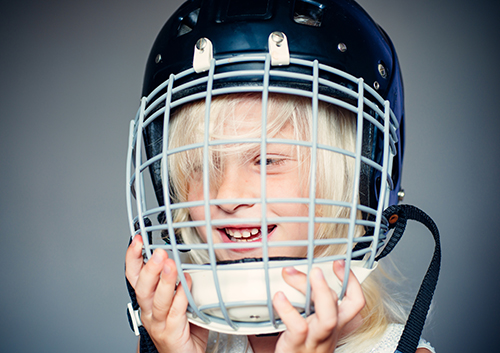
Poor April. While other months celebrate romance, or giving thanks, or costumes and candy, April has—April Fool’s Day and a tax deadline. We might be forgiven for thinking these two dates seem more like warnings than celebrations.
So here’s a new topic for the April calendar: National Facial Protection Month! Take the opportunity this month to review your safety practices while you’re enjoying your favorite activities.
- Mouthguards
If you have a mouthguard for sports or athletic activities, wear it! In any activity or sport where humans come into contact with solid objects (including other humans) tooth injury is possible. A mouthguard will help protect you from dental injuries caused by falls, physical contact, or other accidents that might happen in your active life. And it’s not just your teeth—mouthguards protect your lips, tongue, and jaw as well.
You can buy mouthguards in stock sizes or shape-to-fit options, or you can have a guard custom made especially for you at our Fairview Heights, IL office. Custom mouthguards fit perfectly and are designed to make breathing and speaking easy and comfortable. And if you wear braces or have fixed dental work such as a bridge, a custom mouthguard can protect your smile and your appliances. Talk to Drs. Rottschalk, Acker, and Froidcoeur about mouthguards for some great advice on how to protect your teeth and mouth.
As long as we’re discussing facial protection, let’s look at some other ways to keep safe as you keep active.
- Helmets
If there’s a helmet available for your sport, use it! Helmets are especially important for protecting athletes from brain injury and concussion, and they help protect the face and jaw as well.
- Face Guards
If you’ve experienced a puck speeding toward you, or a defensive tackle hurtling your way, or a fast ball coming in at 90 miles an hour, you know the importance of wearing a face guard. These guards can help protect your eyes, face, teeth, and jaws. Many sports now recommend using face guards—it’s worth checking to see if your sport is one of them.
- Eye Protection
And let’s not forget eye protection. Whether it’s safety glasses or a visor, protecting your eyes and the bones around them is extremely important. You can even get sports goggles or protective sports glasses with prescription lenses to keep you safe and seeing clearly.
We have the training and experience to help treat and restore injured teeth. But we will be the first to tell you, the very best treatment is prevention!
So here are a few suggestions for your calendar this month:
- If you haven’t gotten a mouthguard yet, now’s the time. Tooth and mouth injuries occur in sports beyond hockey and football. If you play basketball, ski, skateboard, ride a bike—in fact, almost any sport where you can fall or make contact with a person or object—a mouthguard is a must.
- If you need to replace an ill-fitting or damaged helmet and face guard, do it before your next game. And do replace a bike helmet if you’ve been in a crash—most likely it won’t be as protective, even if damage isn’t visible.
- Talk to your eye doctor about protective eyewear if off-the-rack products don’t work for you.
- If you are a parent or caregiver, make sure your child athlete has the proper facial protection—and uses it.
- If you are a coach, make sure your athletes have the right protective gear—and wear it.
- It’s also a great time to commit to using your protective gear every single time you’re active.
But, wait—these reminders are helpful and important, but weren’t we promised something to celebrate this April? Good catch! The great news is, using facial protection for sports and athletic activities gives you rewards you can celebrate all year: fewer injuries, fewer visits to the emergency room, and a beautiful, healthy, intact smile. Suit up!