



Why is replacing missing teeth important?
January 31st, 2018

When we talk about teeth, every single one of yours counts. Whether you’ve lost a tooth due to injury or poor oral hygiene, it’s worth seeing Drs. Rottschalk, Acker, and Froidcoeur to evaluate all your replacement options. If you don’t, you could suffer negative effects to your teeth, gums, jawbones, appearance, and self-esteem.
Depending on how many teeth are missing and where they are located, Drs. Rottschalk, Acker, and Froidcoeur may suggest an implant, fixed bridge, or a removable bridge.
Addressing missing teeth as soon as possible is in your best interests. If you don't, the consequences might include:
- Shifting teeth: When you lose a tooth, the space it creates allows the neighboring teeth to drift and move out of alignment. A once-straight smile and correct bite can quickly turn into crooked teeth and a misaligned bite.
- Tooth decay and/or gum disease: After teeth have shifted, it can be harder to reach all areas around them to brush and floss properly. The buildup of bacteria and plaque can result in periodontal disease and the loss of your remaining teeth due to decay.
- Effect on jaws: Missing teeth alter your bite and how your teeth and jaws contact one another. This puts added strain on your jaw joint (TMJ) and can contribute to the development of TMJ disorder.
- Change in face and appearance: When you lose a tooth, your gums and your jawbone are no longer stimulated in that area. A dental implant replaces the root of a tooth or several teeth, and provides stimulation to prevent bone loss. If the root isn’t replaced, this can lead to deterioration of the jawbone and alteration of the shape and appearance of your face. Your face, especially the cheeks, can look older and more sunken.
Replacing missing teeth is an essential step for your physical and emotional health. If they are replaced in a timely manner at our Fairview Heights, IL office, you’ll continue to have the same wonderful smile you’ve always had.
Is soda really bad for your teeth?
January 24th, 2018

You take a sip of soda – and someone remarks, “That’s going to ruin your teeth!”
Is that true? Is sweet soda the enemy of a healthy smile? The answer, unfortunately, is that one glass might not hurt your teeth, but drinking soda regularly can do some real damage.
Sodas are one of America’s favorite drinks. The American Academy of Cosmetic Dentistry says about half of us drink soda regularly, averaging 2.6 glasses each day.
That’s a lot of soda considering the drinks are acidic, full of sugar, and have little or no nutritional value. It may surprise you to learn that it’s actually the acidity of cola, not the sugar, which poses the biggest threat to teeth. Over time, repeated exposure to soda wears down tooth enamel, leaving teeth stained and less able to prevent cavities.
As enamel wears away, teeth can become discolored, take on a rough texture, and become highly sensitive to hot or cold. Your teeth may start to tingle, and brushing or flossing can cause pain. If not checked by dental care, teeth may start to erode, becoming thinner and more likely to crack. It’s a pretty high price to pay for a glass of soda.
Of course, sodas are not the only culprits in tooth erosion. Coffee, wine, and some fruit juices are also acidic, though these drinks tend to have less acidity that a typical soda.
So what can you do to protect your teeth?
1. Cut back – way back – on acidic drinks.
2. Add more water to your daily diet in place of sodas.
3. Use a straw when you drink.
4. Don’t confuse diet soda with a healthy alternative. Diet drinks are just as acidic as regular sodas.
5. Rinse your mouth with water after drinking soda. The rinse may remove some acid from your teeth, although abstaining from the soda would do more good.
6. Hold off on brushing your teeth after drinking soda. Brushing too hard can weaken enamel that is already covered in acid.
7. Pay attention to your teeth, both how they look and how they feel. Let Drs. Rottschalk, Acker, and Froidcoeur know if you see signs of discoloration or erosion, or feel tingling. Make an appointment at our Fairview Heights, IL office if you feel tooth or gum pain when eating or drinking.
Make Brushing Fun!
January 17th, 2018

It’s gratifying to know your child has good oral hygiene, especially starting from an early age. We know it can be difficult to get your son or daughter to brush those tiny teeth, let alone brush them well enough, every day. Drs. Rottschalk, Acker, and Froidcoeur and our team are here to give you some tips on how to help your youngster learn excellent oral health habits.
Your child should brush his or her teeth at least twice a day in order to prevent cavities and decay. An grownup may have to assist with flossing or using mouthwash. Always make sure your little one doesn’t swallow toothpaste or mouthwash in the process.
Only buy alcohol-free mouthwash, especially if you have young children in your household. Oral healthcare should be made fun from the start, to create good habits!
Helpful Tips
- Set a good example. Brush your teeth with your children and make it fun! Pick a two-minute song to play while brushing and dance along to it.
- Make it a race to the bathroom to see who can get the toothbrush and floss out first.
- Use a sticker sheet. For every night your children brush well, give them a sticker. After they’ve earned certain number of stickers, they win a reward. Let them pick it!
- Let your child check your brushwork, or try letting your youngster brush your teeth!
- Allow children to play with a toothbrush if they want to. They can brush their favorite stuffed animal’s or doll’s teeth before bed as well.
- Let your child pick his or her own toothbrush or toothpaste from a range of options you provide. Kids might pick one with their favorite cartoon character(s) on it, for example.
- Get a two-minute brushing timer your child can flip over when he or she starts to brush. Your son or daughter can watch the sand fall until it’s empty, which notifies the kid it’s time to stop brushing.
- Buy special children’s mouthwash that is colored to stain the areas of the child’s mouth where he or she needs to re-brush for effectiveness.
- Be gentle when your little one makes a mistake like forgetting to brush, and remind your son or daughter about the importance of good oral health in a fun, loving way.
There are plenty of ways to make brushing your child’s teeth more fun and effective. When Drs. Rottschalk, Acker, and Froidcoeur and the parents work together, we can help establish good oral health habits in children that will last a lifetime.
Take the trouble to set a great example for your children, and they will follow in your footsteps. If you’re concerned about your child’s oral health, contact our Fairview Heights, IL office and schedule an appointment with our team.
Avoid Brushing After Every Single Meal!
January 10th, 2018
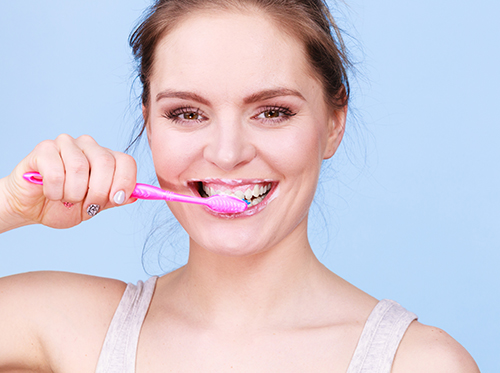
Here is some surprising yet worthwhile advice you might be hearing for the first time: Brushing after a meal can be incredibly bad for your teeth if you do it after eating certain foods.
Enamel is an extremely hard mineral on the exterior of each of your teeth. It’s actually the hardest substance in the human body: It’s even stronger than your bones! Its only weakness is that acids in the food we eat can easily destroy enamel.
Healthy teeth thrive in an environment that has the proper pH balance. That ensures your mouth doesn’t start the process of demineralization. That’s what happens when alkaline turns into acid, which attacks and softens the enamel on the surface of your teeth. Pores and fissures form, and that’s when the harmful bacteria go to work.
Our mouth’s pH level fluctuates depending on what we eat throughout the day. Examples of the most common highly acidic foods include citrus fruits, soda, and sugary foods. Highly acidic foods tip the balance of pH in your mouth from a healthy alkaline to a dangerous acid.
Can brushing your teeth immediately after a meal lead to even more damage? The answer is yes!
Eating highly acidic foods causes your teeth to be more susceptible. If you brush your teeth when they have been weakened by acids, even more destruction can happen to your enamel. Your toothbrush’s bristles will actually wear away some of your enamel. So it’s healthier to wait at least an hour after eating or snacking to brush.
Good preventive measures to take instead of brushing after you eat include:
- Rinsing or drinking water
- Chewing sugarless gum
- Consuming dairy or non-acidic foods to conclude your meal
These practices help produce saliva, which in turn restores a healthy pH level in your mouth and coats the teeth with minerals they need.
Once you’ve allowed time for your mouth to be restored to a healthy pH level, you may brush your teeth as you normally would. Keep in mind that acidic foods can weaken the enamel on your teeth and take the right measures to prevent spiking pH levels.
Most important, don’t forget to wait to brush at least one hour after you eat!
Still have questions? Call our Fairview Heights, IL office and schedule an appointment with Drs. Rottschalk, Acker, and Froidcoeur.